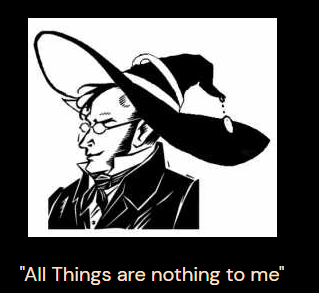
Conjuration wizard! My personal favorite wizard in the game. In this article, we’ll be focusing on the level 2 feature of conjuration wizard called “minor conjuration”. To start we’ll look at what minor conjuration is.
Minor Conjuration
Starting at 2nd level when you select this school, you can use your action to conjure up an inanimate object in your hand or on the ground in an unoccupied space that you can see within 10 feet of you. This object can be no larger than 3 feet on a side and weigh no more than 10 pounds, and its form must be that of a nonmagical object that you have seen. The object is visibly magical, radiating dim light out to 5 feet.
A quick note on “that you have seen”: in order to ‘see’ objects, we can either say we saw them in our backstories, or we can produce illusions of them with minor illusion or even prestidigitation. I recomend the former, as there is a very firm counter argument that you have not seen ‘the object’ but merely an illusion of said object, and so can’t conjure it. This goes into things like “what if i saw it in a book? in a dream? what if i saw it in someone elses memory?”, regardless, the easiest and least hassle way to have access to these objects is to simply write “I have seen every object at some point” somewhere in the backstory section and be done with it.
This may not seem very powerful on the face of it, but there’s quite a large number of nonmagical items that can fix a variety of problems in your games. This could be black sap to stop charm and frighten effects, or deleting entire rooms of enemies by using high-power explosives.
1. Making normal gear
This is the normal thing people think of when they read about conjuration wizards ability. Need a grappling hook? Conjure it. Need a rope and everyone’s used theirs, somehow? conjure it. shield? you get it.
Here’s a quick list of stuff that might be a good quick thing to conjure
-Rations
-Grappling hook
-Climbing gear
-Snow shoes
-Cold weather clothes
-Lantern oil
-Tent
-Bedroll
-All tools
-Acid Vials
2. Drugs
I’m a huge fan of the drugs in dnd. In this section we’ll be looking at some of the most useful flora in the game to smoke or inject into your character.
“Black Sap. This tarry substance harvested from the dark boughs of the death’s head willow is a powerful intoxicant. It can be smoked as a concentrate or injected directly into the bloodstream. A creature subjected to a dose of black sap cannot be charmed or frightened for 1d6 hours.”
For each dose of black sap consumed, a creature must succeed on a DC 15 Constitution saving throw or become poisoned for 2d4 hours—an effect that is cumulative with multiple doses.
Menga Leaves. The dried leaves of a menga bush can be ground, dissolved in a liquid, heated, and ingested. A creature that ingests 1 ounce of menga leaves in this fashion regains 1 hit point.
A creature that ingests more than 5 ounces of menga leaves in a 24-hour period gains no additional benefit and must succeed on a DC 11 Constitution saving throw or fall unconscious for 1 hour. The unconscious creature awakens if it takes at least 5 damage on one turn.
Muroosa Balm. This paste made from the muroosa bush is known to help prevent sunburn, but it is also a fire retardant. After spending 1 minute applying a quarter pint of muroosa balm to your skin, you gain resistance against fire damage for 1 hour.
Ryath Root. Any creature that ingests a ryath root gains 2d4 temporary hit points. A creature that consumes more than one ryath root in a 24-hour period must succeed on a DC 13 Constitution saving throw or suffer the poisoned condition for 1 hour.
Soothsalts. The crimson crystals have been mined from cavernous veins like those in the mouth of the Miskath Pit and found within smaller geode formations near sites ravaged by the Calamity. Soothsalts are consumed orally in lozenge-sized doses, and frequent users can be identified by the telltale crimson stain around their mouths. A creature subjected to a dose of soothsalts gains advantage on all Intelligence checks for 1d4 hours.
For each dose of soothsalts consumed, the creature must succeed on a DC 15 Constitution saving throw or gain one level of exhaustion—an effect which is cumulative with multiple doses.
Theki Root. This thick marsh root tastes bitter but is thought to aid digestive health. When you use an action to consume a dose, you gain advantage on saving throws against the effects of poisonous or toxic substances for 8 hours.
Wildroot. Introducing the juice of a wildroot into a poisoned creature’s bloodstream (for example, by rubbing it on an open wound) rids the creature of the poisoned condition. Once used in this way, a wildroot loses this property.
Dreamlily, Poison (1gp): A psychoactive liquid that smells and tastes like your favorite beverage, essence of dreamlily is a Sarlonan opiate. First imported to help manage pain during the Last War, it’s now the most commonly abused substance in Sharn. Though dreamlily isn’t illegal if used for medicinal purposes, it’s heavily taxed, and thus most dreamlily is smuggled in and sold on the black market. Dreamlily dens can be found across the lower wards. Consuming dreamlily causes disorienting euphoria and brings about remarkable resistance to pain. A creature under the effects of dreamlily is poisoned for 1 hour. While poisoned in this way, the creature is immune to fear, and the first time it drops to 0 hit points without being killed outright, it drops to 1 hit point instead. A dose of dreamlily costs around 1 gp, or up to ten times that if purchased through legal channels. There are many varieties of the drug, however, and the duration or the price might vary accordingly. [basically, a drug version of death ward, that can also stack with death ward, but requires you to be poisoned]
Willowshade Oil. A dark blue oil can be extracted from the rare fruit of the willowshade plant. A creature can use its action to apply the oil to another creature that has been petrified for less than 1 minute, causing the petrified condition on that creature to end at the start of what would be that creature’s next turn.
Murgaxor’s Elixir of Life:
Whoever drinks this concoction gains advantage on death saving throws for 24 hours.
To summarize: We can be immune to charm, frighten, have 8 temps, resistant to poisonous and toxic substances, gain some health, be resistant to fire, cure poison (mostly the poison we end up giving to people), have advantage on death saves, and can cure the petrified condition. This applies to the whole party, making conjuration wizard one of the best (lets be honest, the best hands down) supports in the game!
3. Tax Evasion
This one is a bit simpler to put into practice. All those costly diamonds, gems, and other expensive components? There’s nothing preventing us from using minor conjuration to make those. diamonds for revivify, 1000gp gems for planar binding, clone diamonds (the container is a bit harder to do, wouldn’t recommend) , and ruby dust for simulacrum? All now free. This frees up all kinds of gold to spend on different things.
4. The bad kind of drugs
Poisons are an often overlooked source of damage for PC’s to use. Why? well, they’re expensive and a ton of monsters are straight up immune to its effects. However, we can make them for free. This makes them particularly worth considering. Be aware that the poison disappears once it has done damage, so we have to take an action to re-conjure it if we want it again. This is a great way to buff up an arrow user. Suddenly, their first landed hit deals an extra 12d6 poison damage. Lets go over some of the better poisons in the game.
First, our injury poisons
Purple worm Poison [Injury]
“This poison must be harvested from a dead or incapacitated purple worm. A creature subjected to this poison must make a DC 19 Constitution saving throw, taking 42 (12d6) poison damage on a failed save, or half as much damage on a successful one.”
This alone can kill a lot of enemies. An arrow coated in purple worm poison will kill a bugbear if it fails its con save, on average. Because it’s an injury poison, no need to worry about accidentally poisoning yourself either, unless you stab yourself.
Wyvern Poison [Injury]
This poison must be harvested from a dead or incapacitated wyvern. A creature subjected to this poison must make a DC 15 Constitution saving throw, taking 24 (7d6) poison damage on a failed save, or half as much damage on a successful one.
Same rules as purple worm, this is mostly an option here to “tone it down” while still making poison for your party ranger or rogue or whoever.
Crawler Mucus [contact]
This poison must be harvested from a dead or incapacitated crawler. A creature subjected to this poison must succeed on a DC 13 Constitution saving throw or be poisoned for 1 minute. The poisoned creature is paralyzed. The creature can repeat the saving throw at the end of each of its turns, ending the effect on itself on a success.
Contact. Contact poison can be smeared on an object and remains potent until it is touched or washed off. A creature that touches contact poison with exposed skin suffers its effects.
Oil of Taggit [Contact]
A creature subjected to this poison must succeed on a DC 13 Constitution saving throw or become poisoned for 24 hours. The poisoned creature is unconscious. The creature wakes up if it takes damage.
Contact. Contact poison can be smeared on an object and remains potent until it is touched or washed off. A creature that touches contact poison with exposed skin suffers its effects.
A creature being paralyzed, even for one round, is usually good enough to mean they’re dead or otherwise taken care of. Oil of taggit puts anyone unconscious for 24 hours, but they wake up if they take damage. The best part about these poisons is that they don’t disapear when used, since they do not cause damage. This means we can conjure a ton of it, coat everyone’s weapon, darts, ect, with it, and every attack from the party now has a chance to either put an enemy to sleep or paralyze them. This is amazing in fights where it works.
Sadly, poison isn’t going to win us every fight. Undeads, elementals, fiends, and many others are immune. So, what else have we got?
5. Tangler Grenades, Smoke Grenades
A tangler grenade is an alchemical, nonmagical item with an ovoid resin shell that shatters on impact. An as action, a creature can throw a tangler grenade at a point up to 60 feet away. Each creature within 10 feet of a shattered tangler grenade must succeed on a DC 15 Dexterity saving throw or be restrained by sticky white webs. As an action, a creature can try to free itself or another creature within its reach from the webs, doing so with a successful DC 20 Strength (Athletics) check. A gallon of alcohol dissolves the webs produced by a single tangler grenade. Otherwise, the webs dissolve on their own after 1 hour, freeing any creatures restrained by them
Tangler grenade is a powerful option, being close to a web spell, but free. This is something we can give to our familiar before the fight starts, and often restrains enemies.
Smoke Grenade
As an action, a character can throw a grenade at a point up to 60 feet away. With a grenade launcher, the character can propel the grenade up to 120 feet away.
One round after a smoke grenade lands, it emits a cloud of smoke that creates a heavily obscured area in a 20-foot radius. A moderate wind (at least 10 miles per hour) disperses the smoke in 4 rounds; a strong wind (20 or more miles per hour) disperses it in 1 round.
Modern equipment, and references a grenade launcher, but medieval smoke grenades did exist. Either way, a useful item to have conjured if you expect to need visual cover, and this cover can’t be dispelled either.
6. The Incarnations of Iirolarthas
This is a spellbook, in equipment, that we can get for free. Would you like any of the following spells?
- 1st level: alarm, detect magic, identify, magic missile, shield, Tasha’s hideous laughter, thunderwave
- 2nd level: arcane lock, continual flame, invisibility, knock, levitate, Melf’s acid arrow, mirror image
- 3rd level: animate dead, bestow curse, clairvoyance, counterspell, dispel magic, fireball, glyph of warding
- 4th level: arcane eye, banishment, blight, dimension door, Evard’s black tentacles, phantasmal killer
- 5th level: Bigby’s hand, cloudkill, dominate person, planar binding, scrying, telekinesis
- 6th level: create undead, disintegrate, globe of invulnerability, move earth, Otto’s irresistible dance
- 7th level: create magen, finger of death, prismatic spray, teleport
- 8th level: demiplane, dominate monster, mind blank, power word stun
- 9th level: blade of disaster, power word kill
We can conjure the book and simply scribe the spells into our own using the normal spell scribing rules. Good spells to grab are:
every ritual, shield, fireball, evards black tentacles, bigbys hand, planar binding, telekinesis, teleport, demiplane, mind blank. If you have the time and funds, feel free to scribe them all, or even cast from the book itself, but that uses up our conjured item.
Feel free to “rest-prep” where we conjure the book, prep our spells for the day, and then disappear it. I would still put all the spells into our own book eventually, but this is serviceable in the meantime.
7. Blowing shit up
Did you think we were just a stoned support character up until this point? Sure we can give other people cool poisons for their arrows, make them and us immune to certain effects, but we want a bit of glory too.
Premier item in the “blowing shit up” category is the catapult munition.
Catapult Munition
“A catapult munition roughly the size and weight of a cannonball.
The munition can be thrown up to 30 feet and explodes on impact. Any creature within a 15-foot-radius sphere centered on the point of impact must make a DC 14 Dexterity saving throw, taking 35 (10d6) fire damage on a failed save, or half as much damage on a successful one. In addition, each object in that area that isn’t being worn or carried takes 35 (10d6) fire damage.”
This is absurdly powerful for level 2, so much so I think a lot of DM’s would ban it outright.
Dynamite
As an action, a creature can light a stick of dynamite and throw it at a point up to 60 feet away. Each creature within 5 feet of that point must make a DC 12 Dexterity saving throw, taking 3d6 bludgeoning damage on a failed save, or half as much damage on a successful one.
A character can bind sticks of dynamite together so they explode at the same time. Each additional stick increases the damage by 1d6 (to a maximum of 10d6) and the burst radius by 5 feet (to a maximum of 20 feet).
Dynamite can be rigged with a longer fuse to explode after a set amount of time, usually 1 to 6 rounds. Roll initiative for the dynamite. After the set number of rounds goes by, the dynamite explodes on that initiative.
The timer isn’t terribly useful, but this is an option to deal bludgeoning damage instead of fire, and comes in less ludicrous numbers. There may be the option of conjuring a whole bundle of dynamite and dealing a full 10d6, but that’s a gray area.
Shatterstick
A shatterstick is a nonmagical, 12-inch-long, 4-pound stake made of blue-tinged infernal iron mined on Cania, the eighth layer of the Nine Hells. When embedded in earth or pounded into solid rock, the stake emits a seismic vibration in a 20-foot radius centered on itself for 1 minute, shaking the ground in that area for the duration. When the effects ends, the shatterstick breaks apart, becoming useless, and all structures within 20 feet of it take 35 (10d6) bludgeoning damage.
This is mostly good for taking out large areas of rock or stone buildings and dungeons. Since it doesn’t deal damage to creatures it’s mostly a utility option. Still, blowing up a portion of a castle, a stone wall, or dungeon, is bound to be useful.
8. Fragments of Suffering
Fragments of Suffering were added in call of the netherdeep, and are considered nonmagical items, meaning we can conjure them! Most of these I find the drawbacks are not worthwhile, but fragment of abhorrence could be useful, and fragment of Rancor could be useful for those who make more attacks, but only barely.
Fragment of Abhorence
Benefit.
Once on each of your turns when you hit a creature with a weapon attack roll, you can force the target to move up to 10 feet away from you in a direction of your choice. A creature that can’t be frightened is immune to this effect.
Drawback.
If you start your turn frightened, you take 2d6 psychic damage.
Fragment of Rancor
Benefit.
When you hit a creature with an attack, you can choose to deal either an extra 2d6 psychic damage to the creature or 4d6 psychic damage to each other creature within 5 feet of it. After you use this benefit, you must finish a short or long rest before you can use it again.
Drawback.
Whenever you are not unconscious and fail a saving throw, you take 2d6 psychic damage.
Fragment of Deception
Benefit.
When you take damage, you can use your reaction to turn invisible and teleport up to 60 feet to an unoccupied space you can see. You remain invisible until the start of your next turn or until you make a damage roll or cast a spell.
Drawback.
You have disadvantage on Wisdom checks.
Fragment of Loathing
Benefit.
When a creature damages you with a weapon attack or a spell, you can focus your hatred on that creature. Until the end of your next turn, you have advantage on attack rolls you make against the creature. You can focus your hatred on only one creature at a time.
Drawback.
You have disadvantage on Charisma checks.
9. Ice Troll Heart
Heart Effects.
An ice troll’s heart remains cold even after the troll’s destruction. As long as the troll can’t regenerate, its heart can be safely removed from its remains, handled, and kept. An ice troll’s heart, once removed, becomes a harmless Tiny object. For the next 24 hours, the heart has the following magical properties:
- A creature that eats the heart gains the ability to regenerate for the next 24 hours, regaining 5 hit points at the start of each of its turns. If the creature takes acid or fire damage, this trait doesn’t function at the start of its next turn. The creature dies only if it starts its turn with 0 hit points and doesn’t regenerate.
- If buried in the ground under a foot or more of earth, the heart melts away and summons a blizzard like that created by the control weather spell. It takes 10 minutes for the heart to melt and the blizzard to form. The blizzard lasts for 8 hours.
- A hag or similar creature can perform a ritual that turns the heart into a magical talisman that acts like a patch of brown mold (see “Brown Mold” in the Dungeon Master’s Guide). This effect lasts until the heart is destroyed.
- A creature proficient with alchemist’s supplies can squeeze enough residual fluid out of the heart to mix with other alchemical ingredients, creating one potion of resistance (cold). It takes 1 hour to create this potion.
[Frostmaiden, 294]
This requires a weird reading, either it’s a nonmagical object with short-term magical properties [the most dubious], and/or you conjure the ice troll heart before it has been ‘removed’, and once in your hand, then it has been ‘removed’, and the 24 hour timer on the properties begins. (it is also a worthwhile take to look at it being instantaneous with each other, as if it is “harvested” as it is conjured, the PC determines which effects get applied first, as it’s two instantaneous events.) A similar way to get it would be to note that it becomes a tiny, harmless object, and then becomes magical, as it states it becomes a tiny, harmless object, and then for the next 24 hours it has those properties. A 3rd interpretation that could net us an ice troll heart hinges on what ‘removing’ it entails, and we may be able to conjure a portion of an ice trolls corpse, a cube cut out of its chest containing its heart or its heart in the pericardium (the fleshy sack hearts are kept in in the body) as a single object.
These are all very particular readings and while I think there is a way that the timer placed on the object for its magical properties gives us a way to conjure it in a non-magical state for it then to advance in time to being magical, most would disagree.
The two big things I see in ice troll hearts is the cold resistance and the regeneration. Cold resistance potions are nice, would make a good way to make gold as a PC, and would give us ways to be resistant to cold encase the need ever arose.
Regeneration of 5hp a turn is a huge deal. Not only does this completely negate the need for down time healing, it even provides a huge amount of in-combat healing, and prevents us from having to make death saves unless we take fire or acid damage. (and then we have advantage on those death saves, thanks elixir of life!).
This leaves enemies only two options: they either deal fire or acid to stop the regen every turn, or they’re forced to coup-de-grace a downed PC, otherwise they’ll just get up at the start of their turn at the very latest. This survivability jump, especially in T1, is massive.
ice troll heart makes conjuration wizard the most potent healer in the game, on top of this, the healing is passive and lasts for 24 hours. I recommend everyone eating one every 12 hours so that, in the event one camp or meal time is interrupted, you have regen anyway. (This advice applies to basically all the ‘drugs’ section too, minus soothsalts, don’t be caught off your black sap and get hit with a dominate person spell.)
10. White ghost orchid seed
“More rarely, the orchids produce a smaller pod holding a single white seed. Among its various magical properties, if a white seed is ground and scattered over a dead body, the body is affected by the resurrection spell. A white ghost orchid seed has no effect if consumed.”
Using similar tech as listed in 9, we can rather easily conjure a white ghost orchid, which is a nonmagical item, and pluck the seed, which then makes a magic item that is the ‘white ghost orchid seed’, which we can use to resurrect anyone who has died in the last 100 years. This means even if someone in the party somehow manages to die given all of our help, they can be brought back as early as level 2.
The least dubious way to do this is to conjure a white ghost orchid that hasn’t produced pods then use druidcraft to make the plant bloom, but we can conjure the whole plant in a pot too.
The seed pod itself is also non-magical, and only casts resurrection once it is ground up and scattered over a body, so we can simply conjure the seed pod.
Thanks to Haen for pointing this particular item out to me
11. Astral Font Water
The astral font has water within it that when drunk, causes a dc 16 wisdom save, if succeeded, you gain the ability to cast one 7th level or lower wizard or cleric spell for free once a day.
Starlight Spellcasting. Water removed from the Astral Font glows faintly for 24 hours, shedding dim light in a 5-foot radius. A spellcaster who quaffs an ounce or more of the glowing water must make a DC 16 Wisdom saving throw. On a failed save, the creature takes 24 (7d6) psychic damage. On a successful save, the creature gains the ability to cast one spell of their choice from the cleric spell list or the wizard spell list. The chosen spell, which must be of 7th level or lower, uses the caster’s spellcasting ability and requires no material components. Once the spell is cast, it fades from memory. A creature can gain only one such spell at a time and can’t benefit from drinking the pool’s water more than once every 24 hours.
While the astral font itself is magical, the water is not, therefore we can conjure the water in frozen form and drink it, gaining the ability to cast any 7th level or lower wizard spell we’d like. Great spells for this include:
Simulacrum
Force Cage
Magic Jar
Magnificent Mansion
Teleport
Planar Bind
Plane shift
Contingency
Conjure Celestial: Couatl
Mirage Arcane
Finger of Death
7th level aid
Tensers Transformation (especially on summons)
Danse Macabre
Chain Lightning
Basically any good cleric or wizard spell you’d like. This opens up being a dybbuk to level 2, as we sim ourselves then each of drink fountain water, planar binding a dybbuk, then we can nystul it into a humanoid and double jar it, this is doable with 3 or 4 days of downtime.
it is also worth mentioning we can scribe any wizard spell we know, meaning every spell of 7th or lower can go into our book if we have the coin now, which we have because we can fabricate things and sell them.
This also opens up a god-exit of infinite sim or mordenkainens mansion tech, but we’re not doing that as it is God-Exit
Thanks again to Haen for finding this
Epilogue
“Minor Conjuration” is a force to be reckoned with, and puts conjuration wizards firmly in a position of being one of the best, if not the best, wizards in the game. items like purple worm poison, catapult munition, and ice troll heart may be tweaked or banned at a “sane” table, but even without those, our utility is near unmatched. Go out there, smoke black sap and obliterate your enemies, because you now know how to conjure the world.


 Boot Brew Blogs
Leave a reply to Bolts and Arrows – A Comprehensive Ranger Overview, Part 4: The Monster Slayer – Mistral's Swarmkeeping Cancel reply